A handful of places in Japan charge more than ¥500,000 for a night. Most of them do not publish their rates, so it is hard to see from outside what that money buys. This article uses one that does publish its rates as a starting point, and works through where the price of Japan’s most expensive stays comes from: how the rooms are built, what is included, and how few rooms there are.
How we handle prices
- We only quote figures that the property publishes on its own website, with the date we checked them
- Booking-site prices change with the date, the room and the plan, so we do not line them up for comparison
- Whether tax, service charge and the hot-spring tax are included differs from place to place. We state it next to each figure
A property that publishes its rates: TENKU
TENKU, in Kirishima, Kagoshima, is unusual at this level in listing its rates villa by villa on its official site. Only five villas with their own hot-spring baths stand far apart on a large plot, and only three of them take overnight guests.
| Villa | Weekday (one night) | Holiday (one night) |
|---|---|---|
| Tenku (the largest on the property) | from ¥500,000 | from ¥575,000 |
| Akanesasu Oka | from ¥400,000 | from ¥460,000 |
| Rinu no Mori | from ¥300,000 | from ¥345,000 |
| The whole property, exclusive use | from ¥5,000,000 | — |
The rates are for two people in one villa with meals. Hot-spring tax, consumption tax and service charge are extra. Holiday rates apply on weekends and public holidays and over parts of the New Year, Golden Week and summer holiday periods.
Reason 1: a building of your own
The clearest difference at the top end is that your room is not one door in a corridor but a separate building. There is no sound from the next room, and the open-air bath is yours alone. The cost is that each property holds very few rooms for its land.
- TENKU: five villas with hot-spring baths, set far apart. Every villa has an open-air bath facing the view
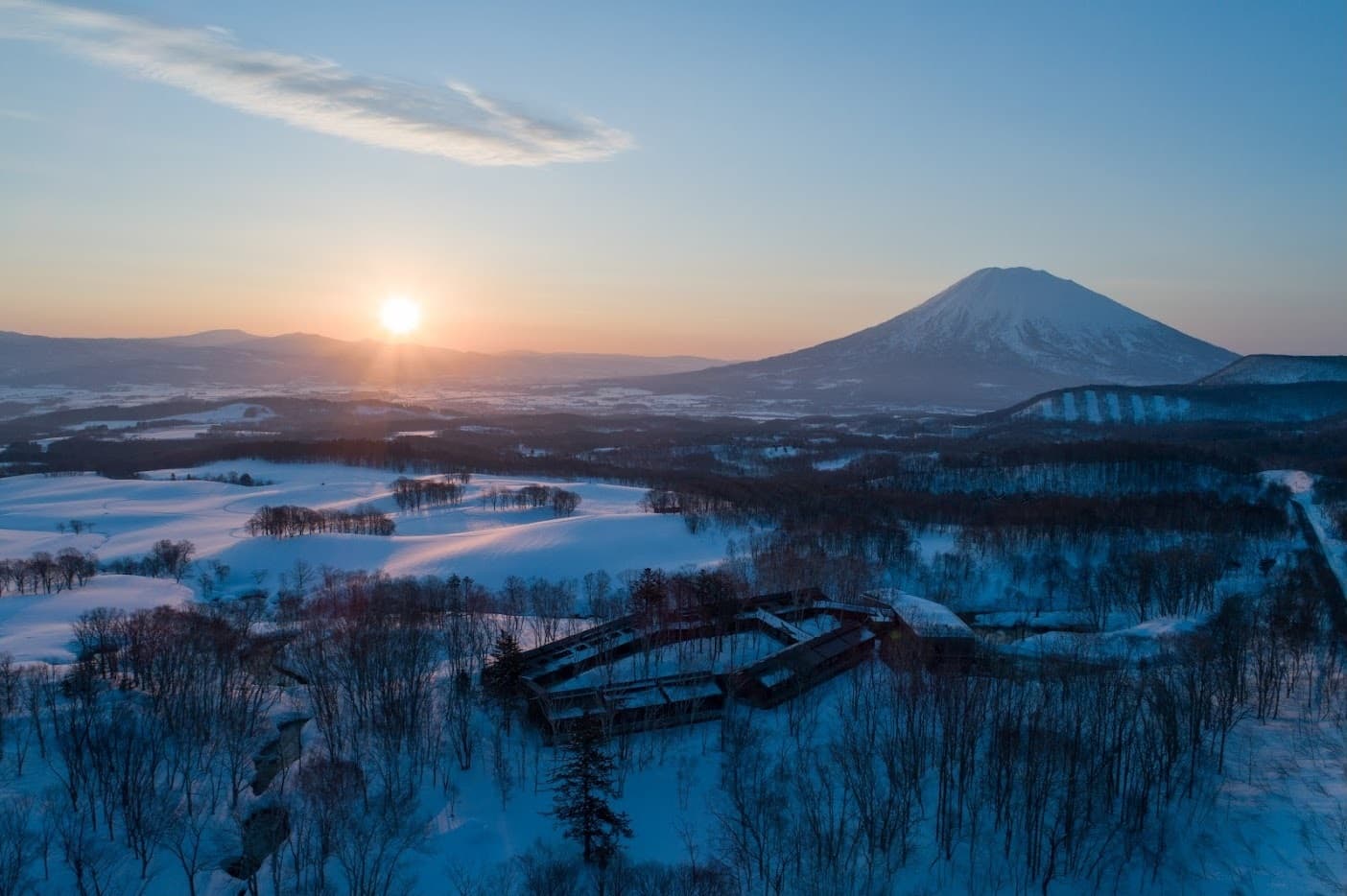
- Zaborin: a ryokan of separate villas in a birch forest at Hanazono, Niseko. Each has an indoor and an open-air bath, placed so the villas cannot see one another
- NOT A HOTEL ISHIGAKI: a single villa on a 3,000-tsubo plot, with four bedrooms for up to ten guests
Reason 2: the size of the rooms
Even in the city, the top hotels start from rooms that are large by any standard. The baseline is different from an ordinary city hotel.
- Aman Tokyo: every room is a suite. The smallest, the Garden View Suite, is 71 sqm; the largest, the Aman Suite, is 157 sqm
- The Ritz-Carlton, Tokyo: the largest suite is on the 53rd floor, 300 sqm, with two bathrooms
Reason 3: what the rate includes
The same figure can buy very different things depending on what it covers. The more expensive the property, the more likely it is that the cost of spending the day inside is already in the rate.
- Aman Tokyo: every rate includes breakfast and the wellness floor, with a 30-metre indoor pool and Japanese baths
- The Ritz-Carlton, Tokyo: rooms with club lounge access include five food and drink presentations a day, among them breakfast and afternoon tea
- TENKU: the published rates are for two people with meals, built around vegetables grown in the property’s own terraced fields
To compare properties fairly, look beyond the nightly figure: check whether meals, drinks and facilities are included, and whether tax and service charge are extra.
Reason 4: how few rooms there are
With fewer rooms, a property can give each one more staff time and more space. A quiet house that never feels crowded is part of what the rate pays for.
- HOTEL BIACLYN HAKODATE: a hotel in the former Russian consulate, built in 1908. Six rooms, all suites, each with a private sauna
- NOBORIOJI HOTEL: a 13-room hotel at the foot of Kofukuji in Nara. The suites are 70 to 85 sqm
How to read the price of an expensive stay
- Check first what the rate includes: meals, drinks, use of the facilities
- Whether tax, service charge and hot-spring tax are extra changes the final bill considerably
- For whole-villa stays, the number of guests changes the cost per person (TENKU’s rates are for two; NOT A HOTEL ISHIGAKI takes up to ten)
- If you can avoid holiday-rate dates, the same room can cost less
FAQ
- Q. What is the most expensive hotel in Japan?
- A. Most properties at the top end do not publish their rates, and prices change with the room, the date and the plan, so there is no fair single answer. This article uses properties that publish their rates to explain where the price comes from.
- Q. What does a ¥500,000 rate include?
- A. It depends on the property. TENKU’s published rates, for example, are for two people with meals, with hot-spring tax, consumption tax and service charge on top. Check what is included on the official site before you book.
- Q. Can you book a whole property?
- A. TENKU offers exclusive use of the entire property on its official site (from ¥5,000,000, checked 4 October 2026). For other properties, check each official site.
Related reading
- Aman Tokyo vs Bulgari Hotel Tokyo: which one to book?
Aman Tokyo and Bulgari Hotel Tokyo compared: location, rooms, what the rate includes, Michelin Keys and Forbes stars, and what guests write about each — to help you decide which suits your stay.