Both are a couple of hours from Tokyo, both have hot springs, and both are sold as a Mount Fuji trip. They are not the same trip. Hakone is a hot-spring valley where the bath is usually the point; Lake Kawaguchi is a lake at the foot of the mountain, where the view usually is. This guide compares the two using what each hotel states on its own official site.
The short answer
- Choose Hakone if a private hot-spring bath is the reason for the trip. Of the Hakone inns we have checked, four give every room its own hot-spring bath (see which).
- Choose Lake Kawaguchi if seeing Mount Fuji from your room matters most — and pick the room by floor. At FUFU Kawaguchiko, for example, the hotel describes its fourth-floor rooms as looking over the lake to the mountain (Lake Kawaguchi properties).
- Without a car, check the station transfer before you book. Several Hakone inns run a shuttle from their nearest station; at Lake Kawaguchi the hotels we checked mostly expect a taxi or bus from Kawaguchiko Station.
Getting there from Tokyo
Times below are the rough guides given on the hotels’ own access pages. Trains and buses change, so check the operator’s timetable for your date.
| Hakone | Lake Kawaguchi | |
|---|---|---|
| By train from Shinjuku | Odakyu Romancecar to Hakone-Yumoto, about 90 minutes, then the Hakone Tozan line up the valley (FUFU Hakone) | JR Chuo line limited express to Otsuki, then the Fujikyu line to Kawaguchiko, about two hours (FUFU Kawaguchiko) |
| From Tokyo Station | Shinkansen to Odawara, then the Hakone Tozan line; to Kowakudani about 85–105 minutes in all (Hakone Suishoen) | Highway bus from the Yaesu South exit to Kawaguchiko Station, about 120 minutes (FUFU Kawaguchiko) |
| By highway bus | Not covered on the access pages we checked | From Busta Shinjuku, Tokyo Station or Shibuya to Kawaguchiko Station, about two hours (Hoshinoya Fuji) |
Mount Fuji views
Lake Kawaguchi sits at the foot of the mountain, and the view is the main thing the hotels there sell. Even so, it varies by room. FUFU Kawaguchiko describes its fourth-floor Kozue Precious Suites as looking over the lake to Mount Fuji, its second- and third-floor rooms as seeing the lake and the mountain between the trees, and its ground-floor rooms only as rooms where you can “feel” the forest and the mountain (room guide).
In Hakone, our write-ups so far cover the baths, the meals and the access. We have not yet checked, room by room, which Hakone rooms face Mount Fuji, so we do not compare views here. No hotel in either place can promise the mountain will be out on the day.
More properties with views of the mountain: Hotels and ryokan with Mount Fuji views.
A hot-spring bath in your room
Hakone is where the private bath is easier to find. At Hakone Suishoen, all 23 rooms have an open-air bath fed straight from the inn’s own spring. At Hakone Gora Karaku, all 70 rooms have an open-air hot-spring bath. At FUFU Hakone, every room type has a hot-spring bath in a bathroom whose windows open wide — an indoor bath, not a separate outdoor one. At Gora Kadan, open-air baths come with certain suites and rooms only.
At Lake Kawaguchi, FUFU Kawaguchiko gives every room a private open-air bath of hot-spring water laid with Mount Fuji lava. At THE KUKUNA, only some rooms have one: the Superior Terrace and Corner Terrace rooms in the Tenku no Terrace wing come with a “water terrace” that has an open-air hot-spring bath; guests in the other rooms use the two shared hot-spring baths. Hoshinoya Fuji’s basic information does not say whether its cabin baths use hot-spring water.
The details for each Hakone inn are on the Hakone page, grouped by how private the bath is. For other regions, see ryokan and hotels with a private onsen.
- Source: Hakone Suishoen, hot spring
- Source: Hakone Gora Karaku, official site (all 70 rooms)
- Source: FUFU Hakone, rooms
- Source: Gora Kadan, rooms
- Source: FUFU Kawaguchiko, hot spring
- Source: THE KUKUNA, rooms
- Source: THE KUKUNA, baths
- Source: Hoshinoya Fuji, basic information
Travelling without a car
| Property | From the station |
|---|---|
| Hakone Suishoen (Hakone) | Shuttle from Kowakudani Station or the Kowakien bus stop, about five minutes; request it when you book |
| FUFU Hakone (Hakone) | Shuttle from Gora Station, about five minutes; request it when you book |
| Gora Kadan (Hakone) | Call from Gora Station and a company car collects you |
| Hakone Gora Karaku (Hakone) | Free shuttle from JR Odawara Station twice a day, booking required; 45–50 minutes, longer in peak traffic |
| FUFU Kawaguchiko (Lake Kawaguchi) | Taxi from Kawaguchiko Station, about 15 minutes; the access page does not mention a shuttle |
| Hoshinoya Fuji (Lake Kawaguchi) | No shuttle; taxi or local bus from Kawaguchiko Station |
| THE KUKUNA (Lake Kawaguchi) | About five minutes by bus from Kawaguchiko Station, or a car if you contact the hotel beforehand |
- Source: Hakone Suishoen, access
- Source: FUFU Hakone, access
- Source: Gora Kadan, access
- Source: Hakone Gora Karaku, access
- Source: FUFU Kawaguchiko, access
- Source: Hoshinoya Fuji, access
- Source: THE KUKUNA, location
The properties in this guide
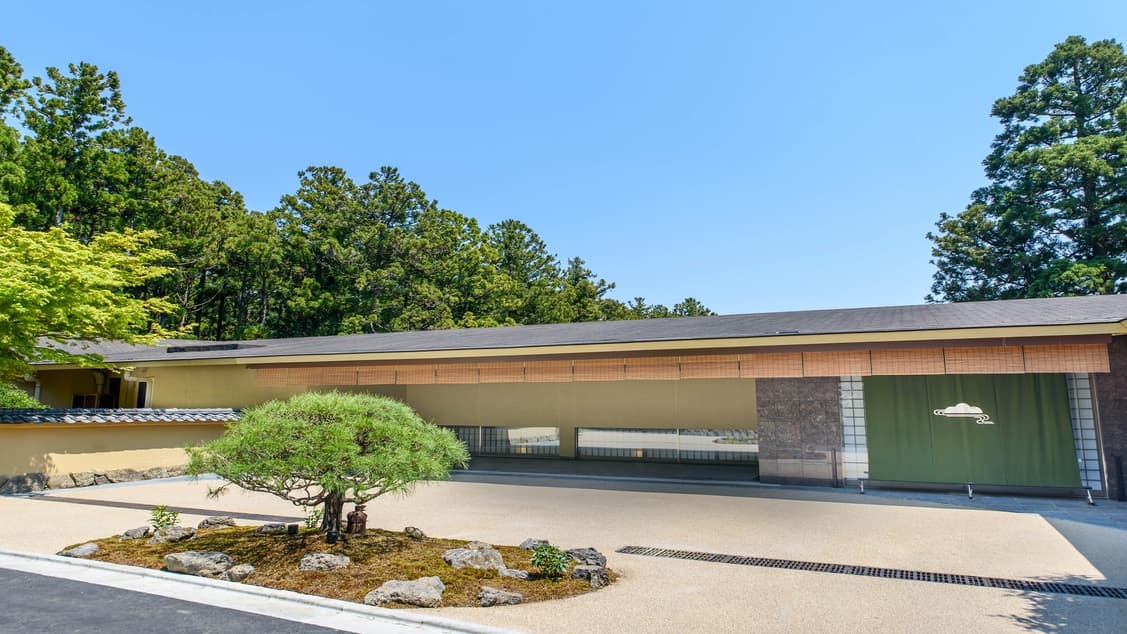
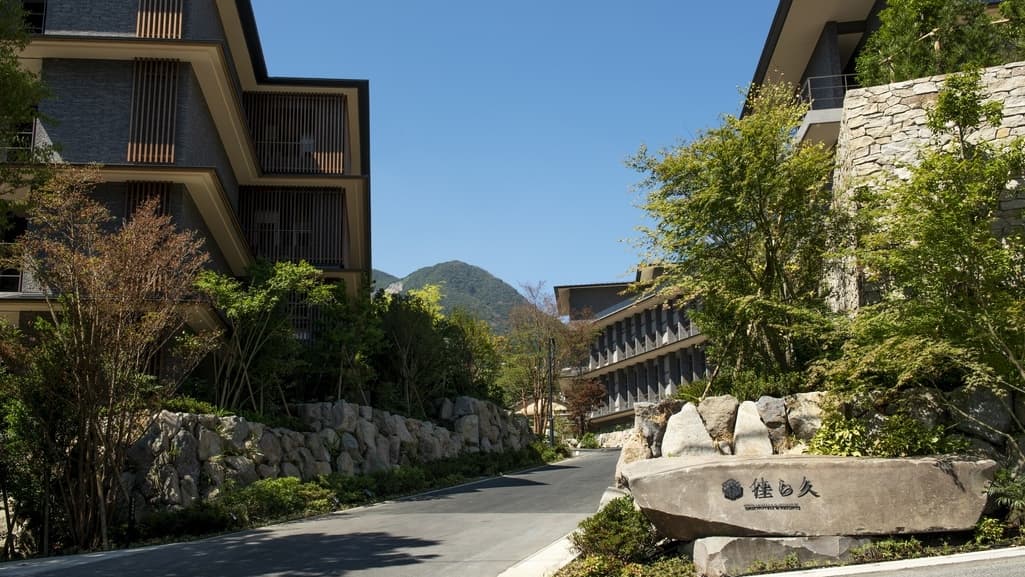


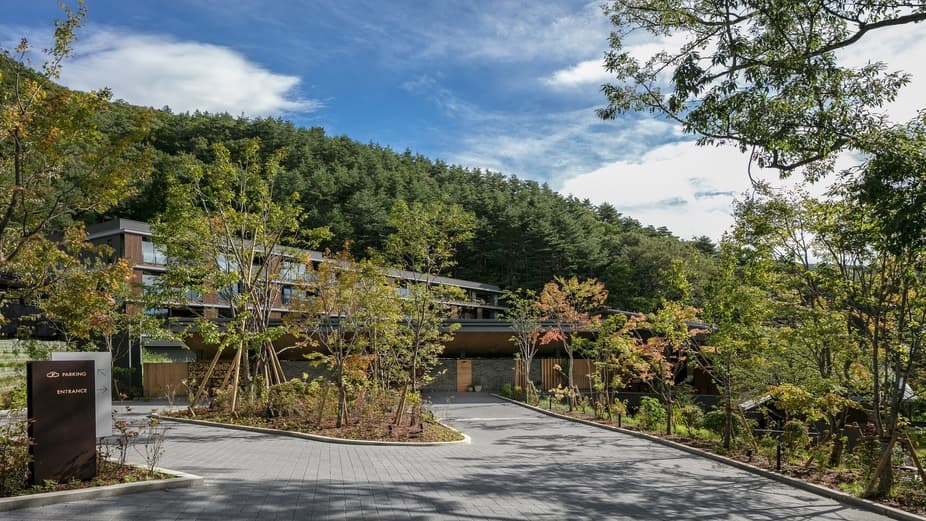
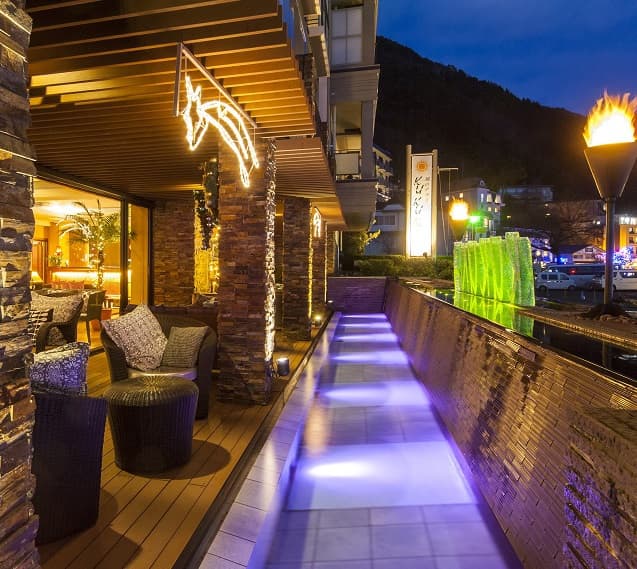
FAQ
- Q. Which is easier to reach from Tokyo without a car?
- A. Both take about two hours from central Tokyo by train or bus, according to the hotels’ access pages. The difference is the last leg: several Hakone inns run a shuttle from their nearest station, while the Lake Kawaguchi hotels we checked mostly expect a taxi or bus from Kawaguchiko Station.
- Q. Where am I more likely to get a private onsen in my room?
- A. Hakone. Of the Hakone inns we have checked, four give every room its own hot-spring bath. At Lake Kawaguchi, every room at FUFU Kawaguchiko has one, and some rooms at THE KUKUNA (the Tenku no Terrace wing); for Hoshinoya Fuji it is not stated.
Related reading
- Private onsen in Japan: what “in-room”, “open-air” and “free-flowing” really mean
A room “with a private onsen” can mean an outdoor bath, an indoor tub by an open window, or a bath you book by the hour. We show what each term covers, using examples from hotels’ official sites, checked October 2026.
- Tattoos at Japanese ryokan and resorts: which parts of the hotel the rules cover
Where the tattoo rules of six Japanese hotels and ryokan apply — shared baths, pools, the spa, public areas — compared using the wording on their official sites, checked October 2026. Whether each accepts guests with tattoos is not stated on the pages we read.
- Gora Kadan vs Asaba: comparing Japan’s three-Key ryokan
Gora Kadan in Hakone and Asaba in Shuzenji — the two ryokan awarded three Michelin Keys in 2026 — compared by location, buildings, rooms and what guests write about each.